

With a passion for precision and dedication to service, we strive to exceed expectations
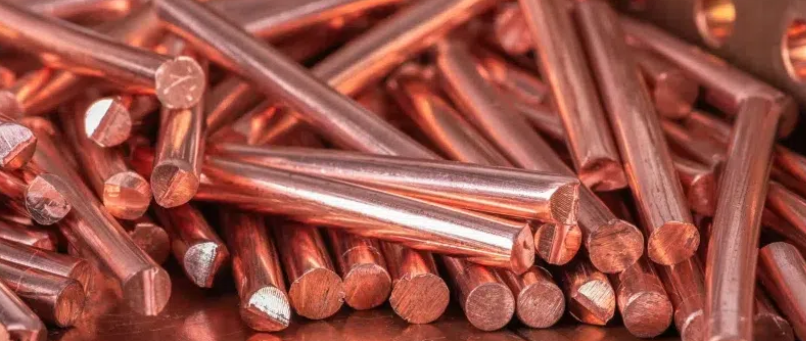
The properties of copper that are most important are high electrical and thermal conductivity, good corrosion resistance, machinability, strength, and ease of fabrication. In addition, copper is nonmagnetic, has a pleasing color, can be welded, brazed, and soldered, and is easily finished by plating or lacquering. Certain of these basic properties may be improved by suitable alloying. Most of the copper that is used for electrical conductors contains over 99.9 percent copper and is identified as electrolytic tough-pitch copper or oxygen-free high-conductivity copper Electrolytic tough-pitch copper is also used for roofing, gutters, downspouts, automobile radiators and gaskets, kettles, vats, pressure vessels, and distillery and other process equipment. Electrolytic tough-pitch copper contains from 0.02 to 0.05 percent oxygen, which is combined with copper as the compound cuprous oxide as cast, copper oxide and copper form an interdendritic eutectic mixture after working and annealing, the interdendritic network is destroyed and the strength is improved. Oxygen-free copper is used in electronic tubes or similar applications because it makes a perfect seal to glass.
Arsenical copper containing about 0.3 percent arsenic has improved resistance to special corrosive conditions and is used for certain condenser and heat-exchanger applications.
Free-cutting copper with about 0.6 percent tellurium has excellent machining properties and is used for bolts, studs, welding tips, and electrical parts such as contact pins, switch gears, relays, and precision electrical equipment.
Silver-bearing copper has a silver content of 7 to 30 oz./ton. Silver raises the recrystallization temperature of copper, thus preventing softening during soldering of commutators. It is preferred in the manufacture of electric motors for railroad and aircraft use.
The most important commercial copper alloy may be sifted as follows.
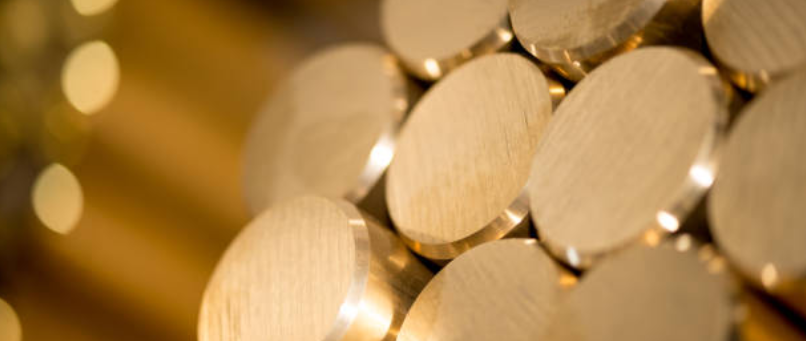
Brass is an alloy of 70% copper and 30% zinc. However, the proportions of copper and zinc can be varied to obtain a range of brasses with varying properties. Brass has higher malleability and low me melting point (900 to 940 °C depending on composition) and its flow characteristics make it a relatively easy material to cast. By varying the proportions of copper and zinc, the properties of the brass can be changed, allowing hard and soft brasses.
Brass has the desirable properties that make it ideal for use as a rolling element material, such as good frictional properties against hardened steel components, reasonable strength, high toughness and excellent thermal conductivity. In addition, brass has good machining and joining characteristics that help to make it very cost-effective.
The malleability of brass has made it the metal of choice. It is used for decoration for its bright gold-like appearance; for applications where low frictions required such as locks, gears, bearings, door knobs, ammunition, and valves; for plumbing and electrical applications; and extensively musical instruments such as horns and bells for its acoustic properties. It is also used in zippers, because it is softer than most other metals in general use, brass is often used in situations where it is important that sparks not be struck, as in fittings and tools around explosive gases.
Aluminum makes brass stronger and more corrosion resistant. Aluminum also causes a highly beneficial hard layer of aluminum oxide (Air 2ROR 3R) to be formed on the surface that is thin, transparent and self-healing.
To enhance the machinability of brass, lead is often added in concentrations of around 2%. Since lead has a lower melting point than the other constituents of the brass, it tends to migrate towards the grain boundaries in the form of globules as it cools from casting. These effects can lead to significant lead leaching from brasses of comparatively low lead content.
Almost 90% of all brass alloys are recycled because of its non-ferrous properties and it can be separated from ferrous scrap by passing the scrap near a powerful magnet. Brass scrap is collected and transported to the foundry where it is melted and recast into billets. Billets are heated and extrud1ed into the desired form and size.
Alpha brass containing up to 36 percent zinc possess relatively good corrosion resistance and good working properties. The color of Alpha brass varies according to copper content from red high-copper alloys to yellow at about 62 percent copper. The Alpha brasses may be divided into two groups, yellow Alpha brasses and red brass
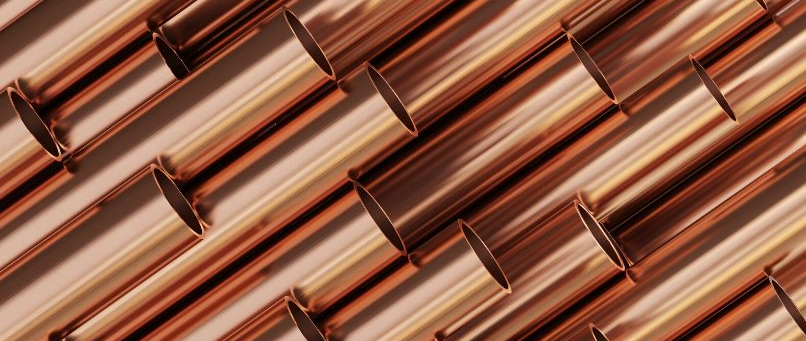
Bronze is an alloy consisting primarily of copper, commonly with about 12– 12.5% tin and often with the addition of other metals (such as aluminum, manganese, nickel or zinc) and sometimes non-metals or metalloids such as arsenic, phosphorus or silicon. These additions produce a range of alloys that may be harder than copper alone, or have other useful properties, such as stiffness, ductility, or machinability.
The archaeological period in which bronze was the hardest metal in widespread use is known as the Bronze Age. The beginning of the Bronze Age in India and western Eurasia is conventionally dated to the mid-4th millennium BC, and to the early 2nd millennium BC in China elsewhere it gradually spread across regions. The Bronze Age was followed by the Iron Age starting from about 1300 BC and reaching most of Eurasia by about 500 BC, although bronze continued to be much more widely used than it is in modern times.
Because historical pieces were often made of brasses (copper and zinc) and bronzes with different compositions, modern museum and scholarly descriptions of older objects increasingly use the generalized term "copper alloy" instead.
