

Advanced CNC technology ensuring flawless detailing, consistency, and repeatability in every production cycle
Machining, also known as subtractive manufacturing, is a prototyping and manufacturing process that creates the desired shape by removing unwanted material from a larger piece of material.
Various machining techniques have been around for decades, but most fall into three principal processes:
Turning:
Turning or Lathing involves rotating the work piece on the machine while a single-edged cutting tool remains stationary. The cutting tool removes material by slowly moving parallel to the work piece’s rotational axis.
Drilling:
Drilling creates a round hole by rotating a cylindrical tool parallel to the work piece’s axis of rotation. The formed hole is equal to the diameter of the tool.
Milling:
Milling is the process of removing material, using rotary cutters, from a work piece in a feed motion perpendicular to the rotational axis of the cutting tool. Milling is one of the most common forms of machining used today
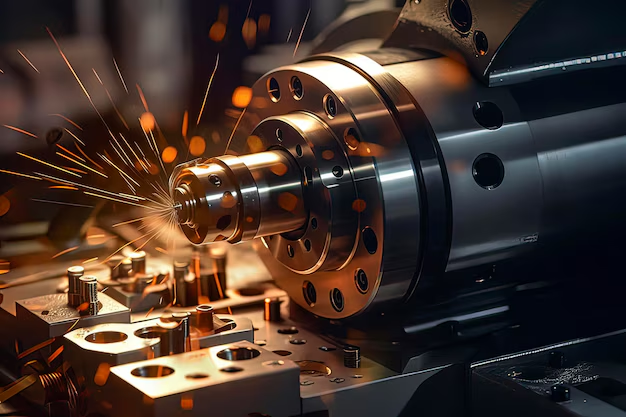
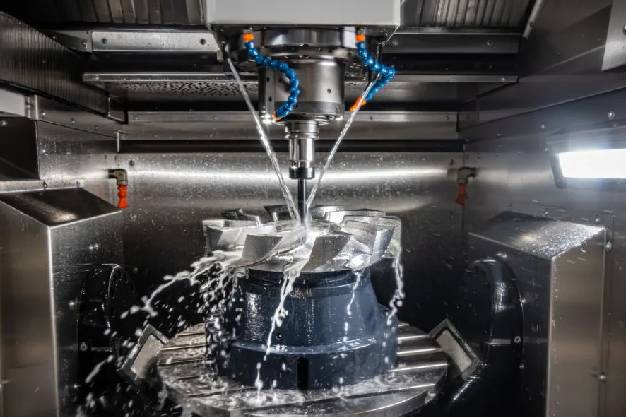
In modern product development, machining requires using a Computer Numeric Control or CNC machine. A CNC machine uses computer software to take CAD design models and map out toolpaths, turning the designs into 3D machined parts. It can create parts from a variety of materials, in varying finishes, with tolerances to the nearest .001”. Unlike rapid prototyping, machined parts use real materials reflecting the end product’s density, finish, and porosity. Machined parts are used for representative testing, models including sliding components where friction is a factor, and sealed components requiring 0 rings and gasket surfaces.
